

Vertigo & Dizziness: Finding the Cause, Finding Relief
Get to the real cause of your dizziness with advanced VNG balance testing on the equiCOG eye-and-head tracking system.
If the room spins, your head feels light, or you feel unsteady on your feet, you deserve a clear answer — not guesswork. That off-balance feeling can be frightening, and it is easy to feel that no one can explain why it keeps happening. At Abhinav ENT Care Center in Hastinapuram, Hyderabad, we take your dizziness seriously and look for the real reason behind it.
Using a careful examination and advanced VNG (videonystagmography) testing on the equiCOG system, Dr. G Abhinav Kumar Reddy — an ENT specialist with around 13 years of experience who provides dedicated vertigo and balance (vestibular) evaluation — works to pinpoint what is happening in your balance system and explains it to you in plain language.
What is a VNG test, and what is equiCOG?
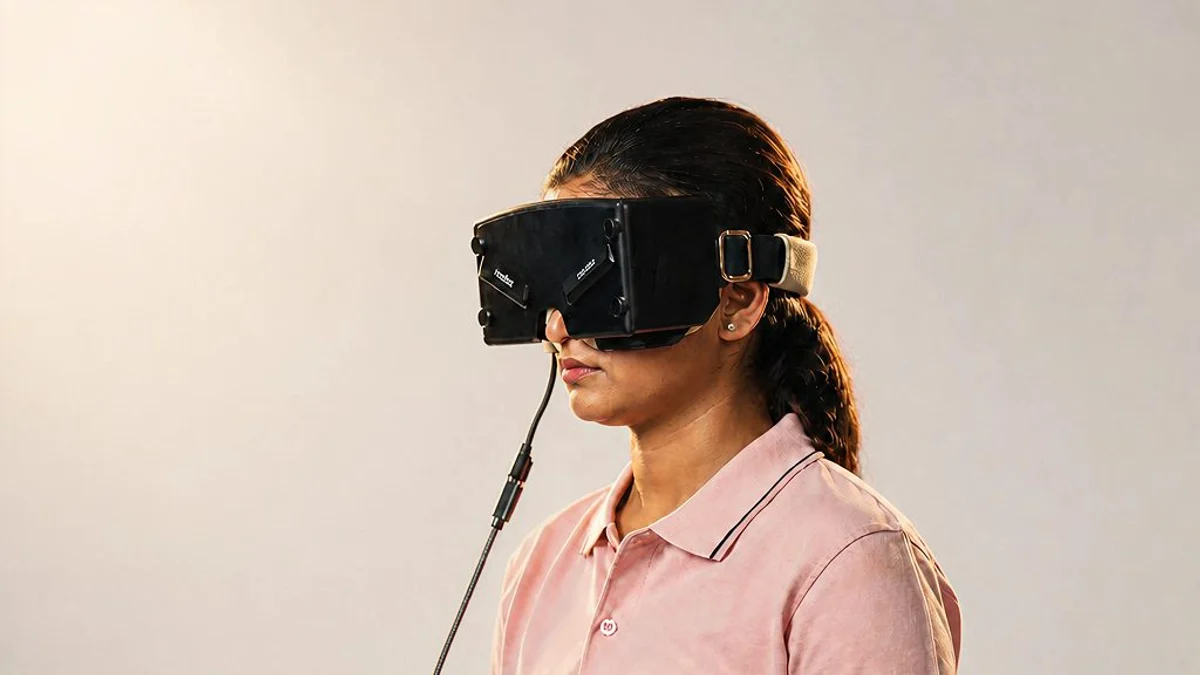
A VNG (videonystagmography) test is a safe, non-invasive way to check how well your inner-ear balance organs and their connections to your eyes and brain are working. There are no needles and no incisions. You simply wear lightweight goggles fitted with tiny infrared cameras while you follow moving dots, lie in a few different positions, and have gentle warm and cool air placed in each ear.
The reason we watch your eyes is that your balance organs and your eyes are linked by a natural reflex — the vestibulo-ocular reflex — which keeps your vision steady when you move your head. When one inner ear is not sending the right signals, it shows up as a specific pattern of eye movement called nystagmus: an involuntary, rhythmic flicker of the eyes. By recording these movements, we get an objective, measurable window into your balance system, rather than relying only on how you describe the dizziness.
equiCOG (Cranio-Oculo-Graphy) is the advanced VNG system we use at the clinic, made by Equidor Medtech LLP in Bengaluru. Unlike ordinary eye-only trackers, equiCOG records both your eye movements and your head movements at the same time, and plays them back together on a single synchronised timeline. This matters because a flicker of the eyes only tells the full story when we can see exactly how your head was moving at that moment, so this paired eye-and-head recording helps us read your inner-ear reflexes more completely and confidently.
It is important to be clear that equiCOG is diagnostic equipment. It measures and records how your balance system behaves; it does not treat or cure vertigo on its own. What it gives us is an accurate, objective foundation on which the right treatment can be planned — and every result is interpreted by your ENT specialist.
The equiCOG system at a glance
These are the real, published capabilities of the equiCOG system we use for VNG testing. It is diagnostic equipment that helps us assess and record your balance function; it is not a treatment in itself, and results are always interpreted by your ENT specialist.
Why an accurate vertigo diagnosis matters
Dizziness is a symptom, not a diagnosis. The same spinning feeling can come from very different causes, and each one needs a different approach. Objective testing helps us stop guessing and start treating the right problem — and can protect you from months of trial and error.
Not all dizziness is the same
A common inner-ear crystal problem (BPPV), a weak inner ear, migraine-related dizziness and other conditions can all feel similar but are managed very differently. Testing helps tell them apart.
Eye and head tracked together
Every nystagmus recording is paired with a synchronised head-motion reference, so your eye movements are read in their true context rather than in isolation.
It pinpoints which ear is involved
By comparing how each ear responds during caloric testing, VNG can show whether one inner ear is weaker than the other, which often points directly to the source of the problem.
Objective, recorded results
equiCOG captures measurable, replayable recordings rather than impressions. This lets us document what we find and follow how your balance changes over time.
It guides the right treatment
A clear diagnosis lets Dr. Abhinav choose the correct next step — whether that is a repositioning manoeuvre, balance exercises, medication or lifestyle advice — and helps decide if onward referral is needed.
What we can assess during your evaluation
A VNG assessment is a set of small, painless tasks rather than a single test, and there are no needles or incisions at any stage. Not every patient needs all of them; Dr. Abhinav selects the parts most relevant to your symptoms. Here is what the different parts involve, in plain English.
Eye-tracking (saccade) test
You look quickly between targets while we measure how fast, accurately and well-timed your eyes jump to them.
Smooth pursuit test
You keep your head still and follow a slowly moving dot with your eyes, to check how smoothly your eyes and brain track movement.
Optokinetic test
You watch a moving full-field pattern while your head stays still; abnormal responses can point to a central, brain-pathway cause.
Gaze test
We check whether your eyes stay steady, or drift and flicker, when you look straight ahead or hold your gaze to one side.
Positional & Dix-Hallpike testing
We gently guide your head and body into different positions to see whether a change of position triggers dizziness — the key test for BPPV, a very common and treatable cause of vertigo.
Caloric test
Gentle warm and cool air is placed in each ear, one at a time, to compare the two sides and reveal whether one inner ear is weaker. Brief, short-lived dizziness during this part is normal.
Head-movement & provocation tests
Because equiCOG records your head as well as your eyes, we can study how your balance reflex responds to motion. Simple manoeuvres such as brief head-shaking can also bring out balance clues not visible while you sit still.
Pupillometry
The system automatically measures your pupils over time, adding an extra layer of information to your assessment.
Video Frenzel examination
A close-up video view magnifies your eyes on screen so subtle involuntary movements can be observed clearly during a tailored examination.
Conditions a VNG assessment helps evaluate
VNG does not diagnose by itself; it gives Dr. Abhinav objective information to help find the cause of dizziness, vertigo and imbalance, and to identify whether one or both inner ears are involved. The final interpretation is always made by the doctor after considering your full history and examination. It is commonly used when assessing:
- Benign paroxysmal positional vertigo (BPPV) — the brief spinning triggered by head or position changes
- Vestibular neuritis and labyrinthitis (inflammation affecting the balance nerve or inner ear)
- Suspected Ménière’s disease and other inner-ear disorders, often with hearing changes or ear fullness
- Unexplained, recurring dizziness or vertigo attacks
- A persistent sense of imbalance, unsteadiness or feeling off-balance on your feet
- Dizziness that may be linked to migraine
- Dizziness where we need to know whether one or both inner ears are involved
- Symptoms that may point to a central (brain-pathway) rather than inner-ear cause, helping decide if onward referral is needed
What to expect on the day
Consultation & history
We begin by listening to your story: when the dizziness started, what it feels like, what triggers it and how it affects your daily life. Dr. Abhinav then examines your ears and does a focused balance assessment.
Simple preparation & comfortable set-up
You will usually be asked to eat only a light meal beforehand and, as brief dizziness can occur, to arrange for someone to drive you home. You then wear the lightweight equiCOG goggles, which sit gently on your face and do not block your view. Nothing goes into your eyes and there are no needles at any stage.
The assessment
You follow moving dots, lie in a few positions, and have gentle warm and cool air placed in each ear. The whole appointment usually takes about 30 to 60 minutes, without rushing.
Reviewing your results
Because equiCOG records everything at 100 fps, Dr. Abhinav can replay your eye and head movements together — even in slow motion — and explain in plain language what the findings mean.
Your personal treatment plan
Together you agree on the next step, whether that is a repositioning manoeuvre, balance exercises, medication, lifestyle guidance or, occasionally, referral for further tests.
Treatment after your diagnosis
Testing is only useful if it leads to relief. Once we understand what is causing your dizziness, treatment can be directed precisely at it — which is exactly why testing comes first. Many causes of vertigo respond very well to simple, well-established treatments, and much can often be done in the clinic itself.
Dr. Abhinav will recommend the option, or combination of options, most suited to your specific condition, set clear expectations and review your progress over time. Where a cause outside the scope of ENT care is suspected, he will guide you to the appropriate next step. The goal is always to reduce your symptoms and help you feel steady and confident again.
Canalith-repositioning manoeuvres
For BPPV, gentle guided head-and-body movements (such as the Epley manoeuvre) help move displaced inner-ear crystals back into place, often bringing quick relief.
Vestibular rehabilitation exercises
A tailored set of balance and gaze-stability exercises helps your brain adapt and compensate, reducing dizziness and improving steadiness over time.
Medication
Where appropriate, medicines can help settle acute symptoms such as severe spinning or nausea, or address an underlying inner-ear condition, as advised by the doctor.
Lifestyle guidance
Practical advice on triggers, hydration, movement and daily habits that can support recovery and reduce how often dizziness affects you.
Vertigo & VNG — Frequently Asked Questions
Take the first step towards steady ground
If dizziness, vertigo or imbalance is affecting your daily life, you do not have to keep guessing about the cause. Book a vertigo evaluation with Dr. G Abhinav Kumar Reddy at Abhinav ENT Care Center, Hastinapuram, Hyderabad, and let advanced VNG testing with equiCOG help find the answer.
Meet Your ENT Specialist
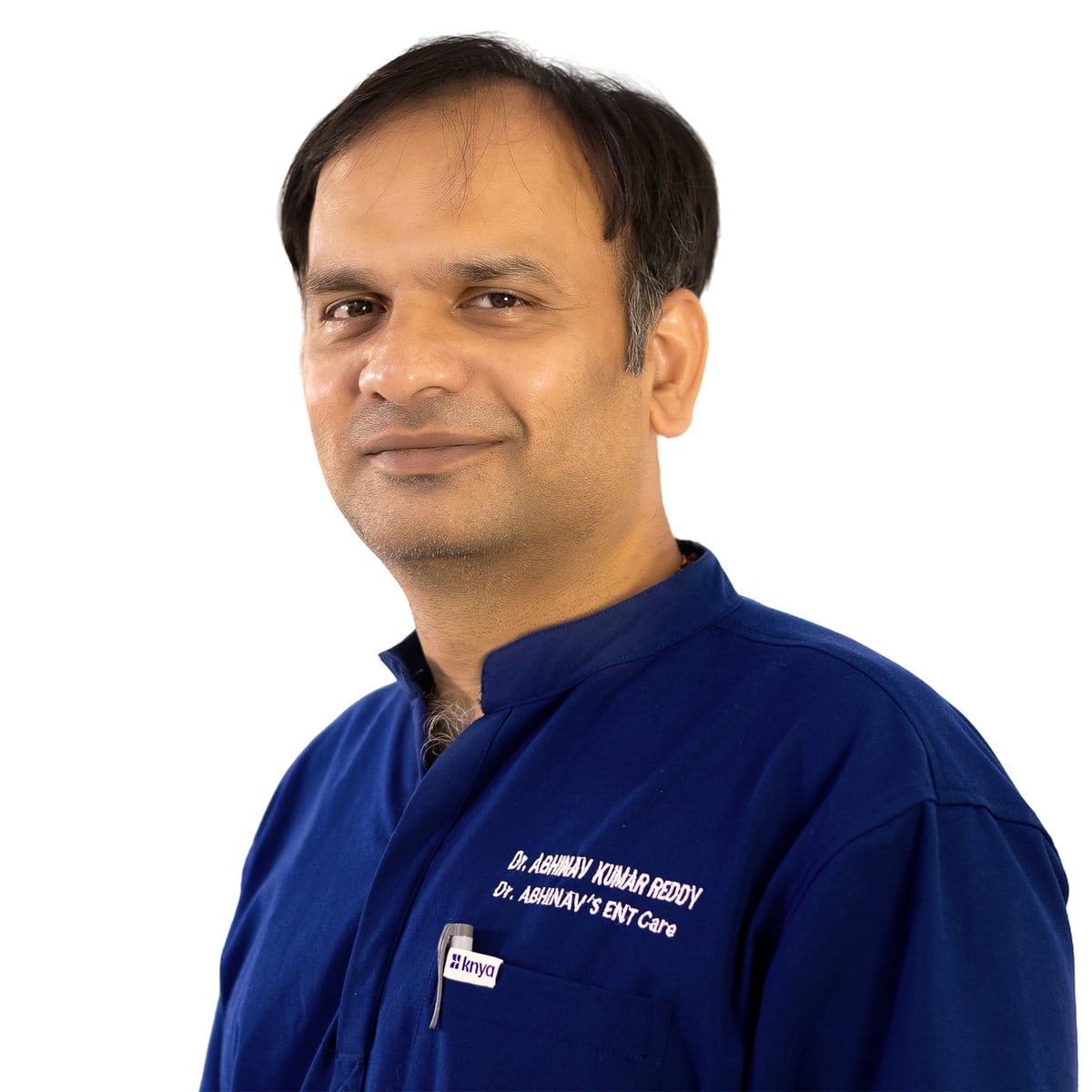
Dr. G Abhinav Kumar Reddy
MBBS, MS (ENT) — ENT Specialist
Book an appointment
Get an accurate diagnosis and a treatment plan tailored to you.