


Coblator-Assisted Procedures
Gentle, low-temperature surgery for tonsils, adenoids and blocked noses
Coblation is a modern surgical method that removes or shrinks troublesome tissue using controlled radiofrequency energy at a relatively low temperature. Because it works more gently than traditional heat-based cautery, it is generally linked with less bleeding and a more comfortable recovery. At Abhinav’s ENT Care Center in Hastinapuram, Dr. G Abhinav Kumar Reddy offers coblation for tonsils, adenoids and enlarged nasal turbinates after a careful in-person assessment.
What are coblator-assisted procedures?
“Coblation” is short for “controlled ablation”. It uses radiofrequency energy passed through a saline (salt-water) field to break down or shrink tissue. The important difference is temperature: coblation works at a much lower temperature than conventional electrocautery, which uses high heat to burn tissue. This gentler action means less damage to the surrounding healthy tissue.
At our clinic, coblation is most commonly used for three procedures. In a coblation tonsillectomy, the tonsils (the two soft tissue pads at the back of the throat) are removed. In an adenoidectomy, the adenoids (tissue high up behind the nose) are removed or reduced. In turbinate reduction, the inferior turbinates (ridges inside the nose that can swell and block breathing) are shrunk to open up the airway.
The procedure is carried out in an operation theatre, usually under general anaesthesia, and is often done as day-care surgery. The ENT surgeon guides a slim coblation wand to the target tissue and gently removes or reduces it while a small amount of saline keeps the area cool. There are no external cuts on the face or neck for these procedures.
Whether coblation is the right choice for you or your child is decided only after Dr. Abhinav examines you in person and reviews your history. Not every patient needs surgery, and the technique is chosen to suit the individual.
Why coblation is used
Coblation has become a popular option for tonsil, adenoid and turbinate surgery because of its gentler approach. The advantages below are general and comparative, and actual results vary from person to person.
Lower-temperature action
Works at a cooler temperature than traditional cautery, so nearby healthy tissue is spared.
Often less bleeding
The controlled technique is generally associated with reduced bleeding during surgery.
More comfortable recovery
Many patients report a smoother, more comfortable recovery compared with older heat-based methods.
Minimally invasive
Tissue is treated internally through the mouth or nose, with no external incisions.
Usually day-care
In suitable cases, the procedure allows the patient to go home the same day.
What the procedure involves
Here are the key features of coblator-assisted surgery, so you know what to expect on the day.
- Radiofrequency in saline
- Energy is delivered through a saline field, which keeps the working area cool while tissue is removed or shrunk.
- General anaesthesia
- You or your child will be asleep and feel nothing during the procedure; anaesthesia suitability is checked beforehand.
- Coblation tonsillectomy
- Removal of the tonsils for recurrent infection or when enlarged tonsils block breathing and sleep.
- Adenoidectomy
- Removal or reduction of the adenoids, often the cause of a blocked nose, mouth-breathing and snoring in children.
- Turbinate reduction
- Shrinking of enlarged inferior turbinates to relieve long-standing nasal blockage.
- No external cuts
- The surgeon works through the mouth or nostril, so there are no visible scars.
- Day-care friendly
- Many patients are observed for a few hours and discharged the same day when it is safe to do so.
Problems it can help treat
Coblation procedures are considered when symptoms are troublesome and simpler measures have not given enough relief. Suitability is always confirmed after an ENT examination.
- Recurrent or chronic tonsillitis (repeated throat infections)
- Enlarged tonsils that block the airway or make swallowing difficult
- Enlarged adenoids causing a persistently blocked nose and mouth-breathing
- Snoring and sleep-disordered breathing, especially in children
- Obstructive symptoms disturbing sleep and daytime energy
- Enlarged inferior turbinates causing long-standing nasal blockage
- Nasal blockage that has not settled with medicines or sprays
- Ear symptoms (such as blocked ears or glue ear) linked to large adenoids, as assessed by the ENT specialist
What to expect
Consultation and assessment
Dr. Abhinav listens to your concerns, examines the throat or nose, and decides whether coblation surgery is genuinely needed.
Planning and pre-operative checks
If surgery is advised, basic fitness and anaesthesia checks are arranged, and all your questions are answered beforehand.
The procedure
Carried out in theatre under general anaesthesia. The coblation wand gently removes or shrinks the target tissue, usually within a short time.
Recovery and observation
You rest and are monitored as the anaesthesia wears off. Many patients go home the same day once it is safe.
Follow-up
A review visit lets the doctor check healing and guide you on returning to normal routine.
Recovery and aftercare
Recovery is usually smooth, but everyone heals at their own pace. After throat surgery, a sore throat, ear-referred pain and tiredness for several days are common; after nasal surgery, some blockage or mild discharge may last a short while as the lining settles. Staying well hydrated, eating soft foods and taking rest help a great deal in the first week.
Dr. Abhinav will give you clear, written instructions on medicines, diet and activity, and tell you the warning signs to watch for, such as fresh bleeding. Do follow the aftercare advice closely and attend your review appointment. If anything worries you during recovery, contact the clinic on +91 63021 34527.
Soft diet and fluids
Cool, soft foods and plenty of fluids soothe the area and support healing in the first days.
Rest and gentle activity
Take it easy for a few days and avoid strenuous activity until the doctor says it is fine.
Take medicines as advised
Use pain relief and any prescribed medicines exactly as directed to stay comfortable.
Watch for warning signs
Contact the clinic promptly if you notice fresh bleeding, high fever or difficulty swallowing fluids.
Talk to an ENT specialist in Hyderabad
If recurrent throat infections, snoring or a persistently blocked nose are affecting you or your child, Dr. G Abhinav Kumar Reddy can help you understand whether a coblation procedure is right for you. Call Abhinav’s ENT Care Center in Hastinapuram on +91 63021 34527 to book a consultation.
Book an appointment
Get an accurate diagnosis and a treatment plan tailored to you.
Meet Your ENT Specialist
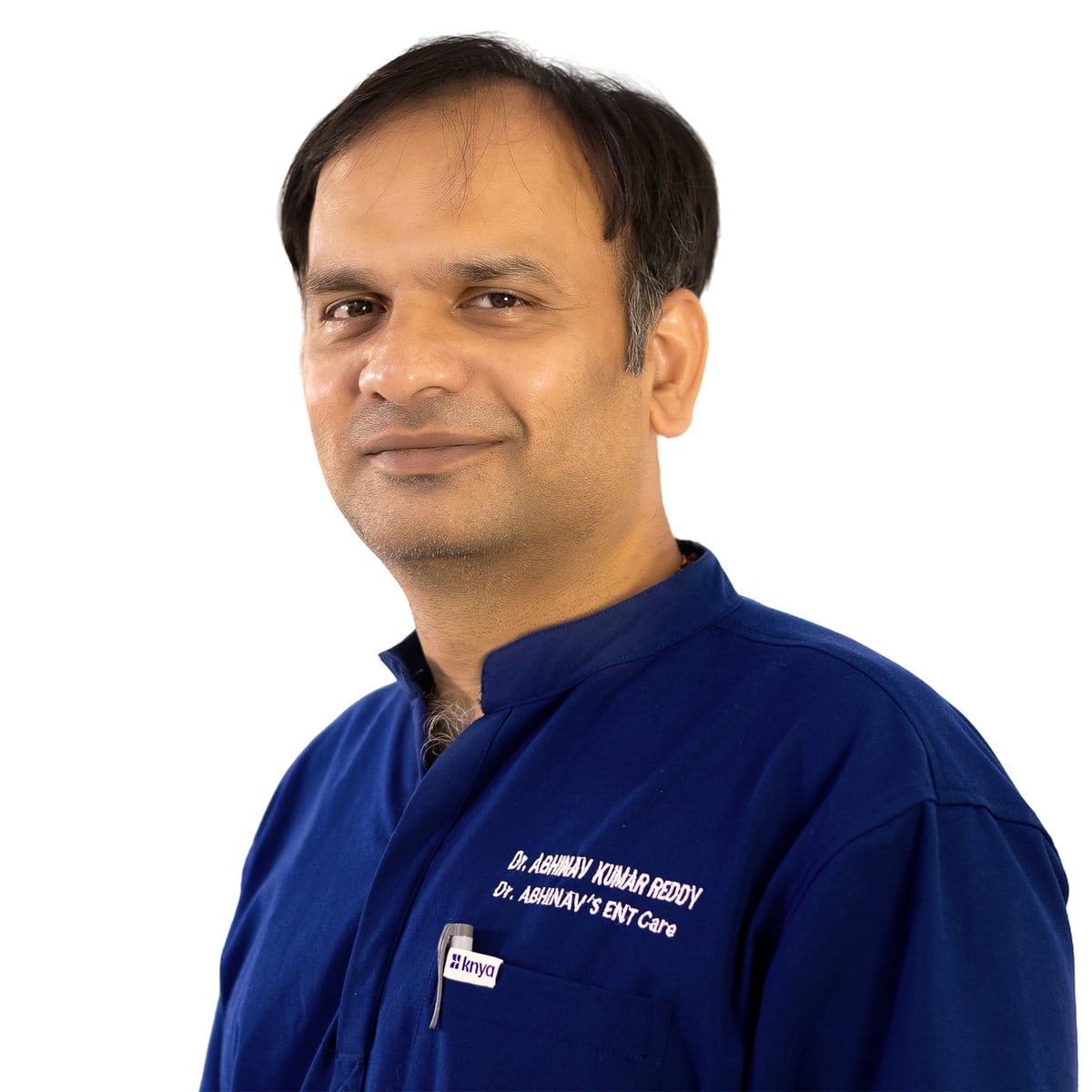
Dr. G Abhinav Kumar Reddy
MBBS, MS (ENT) — ENT Specialist