

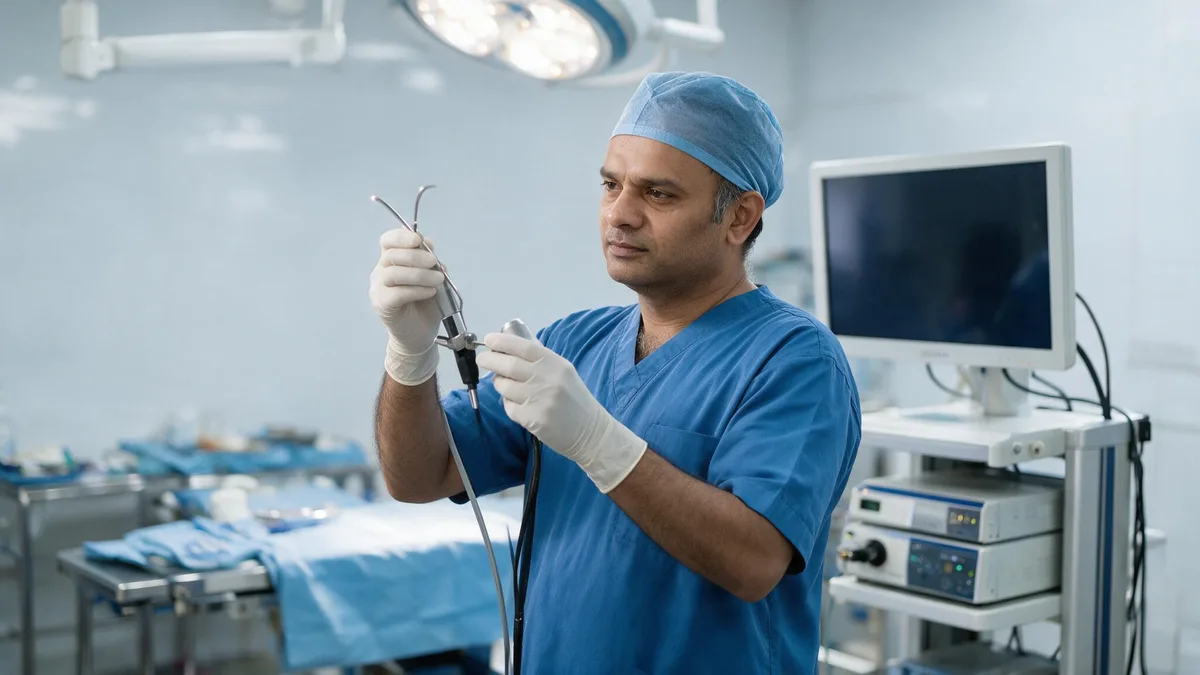
Endoscopic & Debrider-Assisted Sinus Surgery
Minimally invasive relief for long-standing sinus trouble, done entirely through the nostrils
If sinus infections, a constantly blocked nose or nasal polyps have not settled with medicines, keyhole sinus surgery may be an option worth discussing. It is performed entirely through the nostrils, so there are no cuts on your face. At Abhinav’s ENT Care Center in Hastinapuram, Hyderabad, Dr. G Abhinav Kumar Reddy assesses each patient carefully before advising whether this procedure is right for you.
What is Endoscopic Sinus Surgery?
Functional Endoscopic Sinus Surgery, usually shortened to FESS, is a minimally invasive operation used to treat ongoing sinus problems. The word “endoscopic” means it is done with an endoscope, a thin telescope with a light and camera that lets the surgeon see clearly inside the nose. Everything is carried out through the nostrils, so there are no external or facial incisions (cuts).
Your sinuses are air-filled spaces in the bones around your nose. They drain into the nose through small natural openings. When these openings become swollen or blocked, mucus gets trapped, which can lead to repeated infections, pressure and a blocked nose. The aim of FESS is to gently clear the diseased tissue and reopen these natural drainage pathways, so your sinuses can drain and breathe normally again.
To do this precisely, the surgeon often uses a powered microdebrider. This is a fine instrument that carefully removes diseased tissue and nasal polyps (soft, non-cancerous swellings in the nose) while sparing the healthy tissue around them. Because it is tissue-sparing and controlled, it allows delicate, accurate work in a small space.
FESS is usually planned as a day-care or short-stay procedure and is performed under anaesthesia. Whether it suits you depends on your symptoms, your scan findings and your overall health, which Dr. Abhinav will discuss with you in person before recommending surgery.
Why this approach is used
For suitable patients, keyhole sinus surgery offers several practical advantages over older, more open operations.
No cuts on the face
The entire procedure is done through the nostrils, so there are no external scars.
Minimally invasive
Working through natural openings generally means less trauma to surrounding tissue.
Precise, tissue-sparing removal
The microdebrider removes diseased tissue and polyps while protecting healthy lining.
Often day-care
Many patients can go home the same day or after a short stay, once the doctor is satisfied.
Restores natural drainage
Reopening blocked sinus pathways helps the sinuses drain and ventilate the way they should.
What the procedure involves
Here are the key features that make up endoscopic, debrider-assisted sinus surgery.
- Endoscopic visualisation
- A thin telescope with a camera gives a clear, magnified view inside the nose and sinuses.
- No external incisions
- All work is done through the nostrils, avoiding cuts on the face or gums.
- Powered microdebrider
- A precise instrument that gently shaves away diseased tissue and polyps while sparing healthy lining.
- Reopening drainage pathways
- The natural openings of the blocked sinuses are cleared so mucus can drain freely.
- Performed under anaesthesia
- The procedure is carried out under anaesthesia so you are comfortable throughout.
- Day-care or short stay
- Depending on your case, it is often planned as a same-day or short overnight procedure.
- Individually planned
- The exact extent of surgery is tailored to your symptoms and CT scan findings.
Conditions it can help treat
Endoscopic sinus surgery is generally considered when appropriate medical treatment has not brought enough relief. It may be advised for:
- Chronic rhinosinusitis (long-standing inflammation of the nose and sinuses)
- Nasal polyps (soft swellings in the nasal lining causing blockage)
- Recurrent sinus infections that keep coming back despite medicines
- Sinusitis not responding adequately to medical treatment
- Fungal sinusitis
- Certain structural blockages affecting sinus drainage
- Persistent nasal congestion and sinus pressure linked to blocked drainage pathways
What to expect
Consultation and assessment
Dr. Abhinav reviews your symptoms and history, examines your nose, often with an endoscope, and may advise a CT scan to plan treatment. Surgery is only recommended if it is the right step for you.
Preparing for surgery
If you decide to go ahead, you will be guided on pre-operative checks, which medicines to pause and simple instructions such as fasting before anaesthesia.
The procedure
The surgery is done through the nostrils under anaesthesia using an endoscope and microdebrider. Diseased tissue and polyps are removed and blocked sinus openings are reopened.
Recovery and going home
This is often a day-care or short-stay procedure. You may have some congestion and mild discomfort initially, and you will be observed before being discharged with clear instructions.
Follow-up cleaning
Follow-up visits allow gentle cleaning of the nose and monitoring of healing, which is an important part of getting a good result.
Recovery and aftercare
It is normal to have some nasal congestion, mild discomfort and a little blood-tinged discharge in the first few days after surgery. This usually settles gradually. Your sense of smell and clear breathing may take a little time to improve as the inside of the nose heals.
Healing is helped a great deal by following your aftercare instructions and attending your follow-up appointments. During these visits, the nose may be gently cleaned to remove crusts and to help the sinuses heal well. Recovery times vary from person to person, so Dr. Abhinav will guide you on what is right for your situation.
Saline nasal rinses
Use salt-water rinses as advised to keep the nose clean and comfortable.
Take medicines as prescribed
Complete any antibiotics, sprays or other medicines exactly as instructed.
Rest and avoid strain
Avoid heavy lifting, strenuous activity and forceful nose-blowing while you heal.
Attend follow-up visits
Come for scheduled cleaning and reviews, as these are key to a good recovery.
Talk to an ENT specialist in Hyderabad
If long-standing sinus problems or nasal polyps are affecting your daily life, a proper assessment is the best first step. Dr. G Abhinav Kumar Reddy will examine you and explain whether endoscopic sinus surgery could help in your case. Visit Abhinav’s ENT Care Center at Hasthinapuram Central, Hastinapuram, Hyderabad 500074, or call +91 63021 34527 to book an appointment.
Book an appointment
Get an accurate diagnosis and a treatment plan tailored to you.
Meet Your ENT Specialist
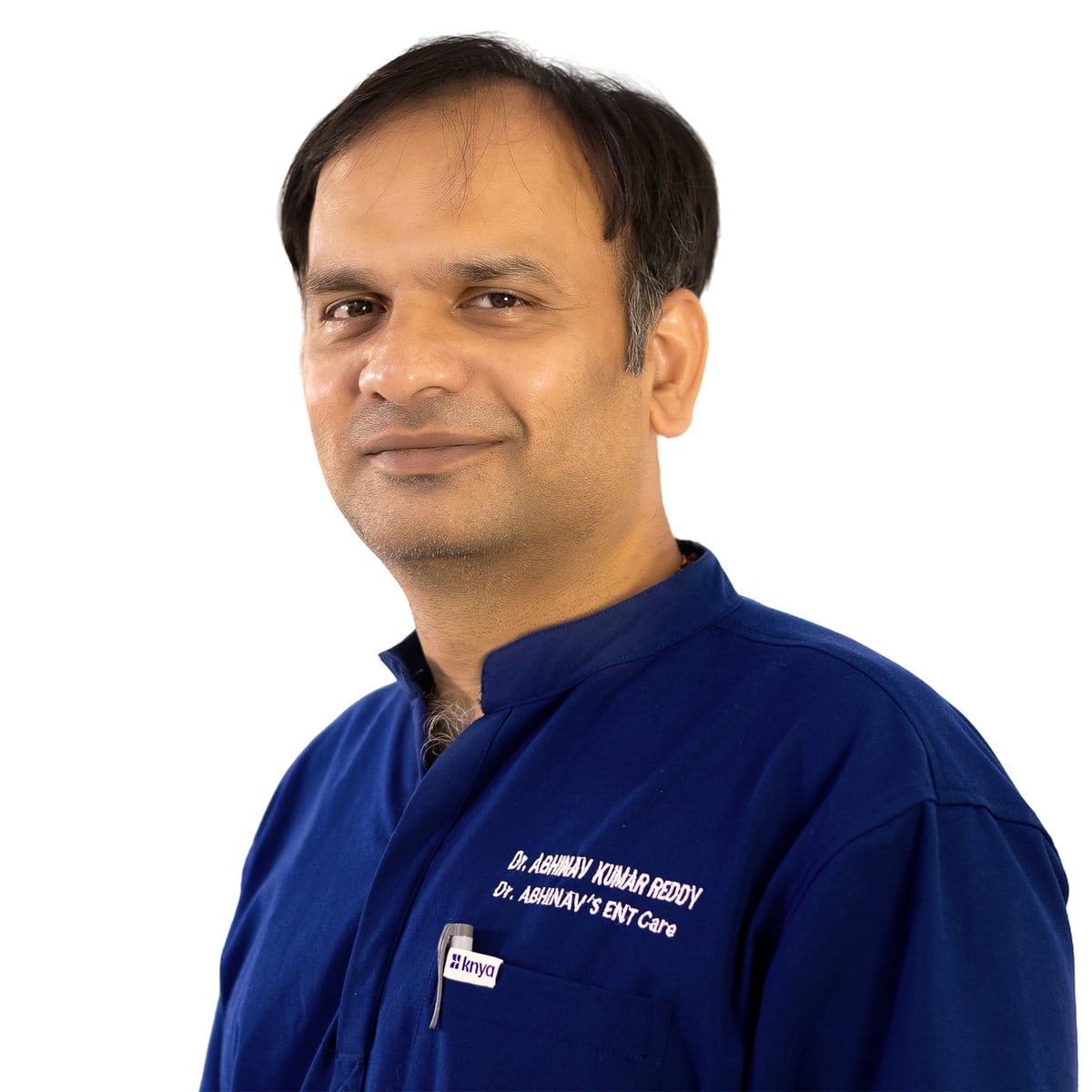
Dr. G Abhinav Kumar Reddy
MBBS, MS (ENT) — ENT Specialist