

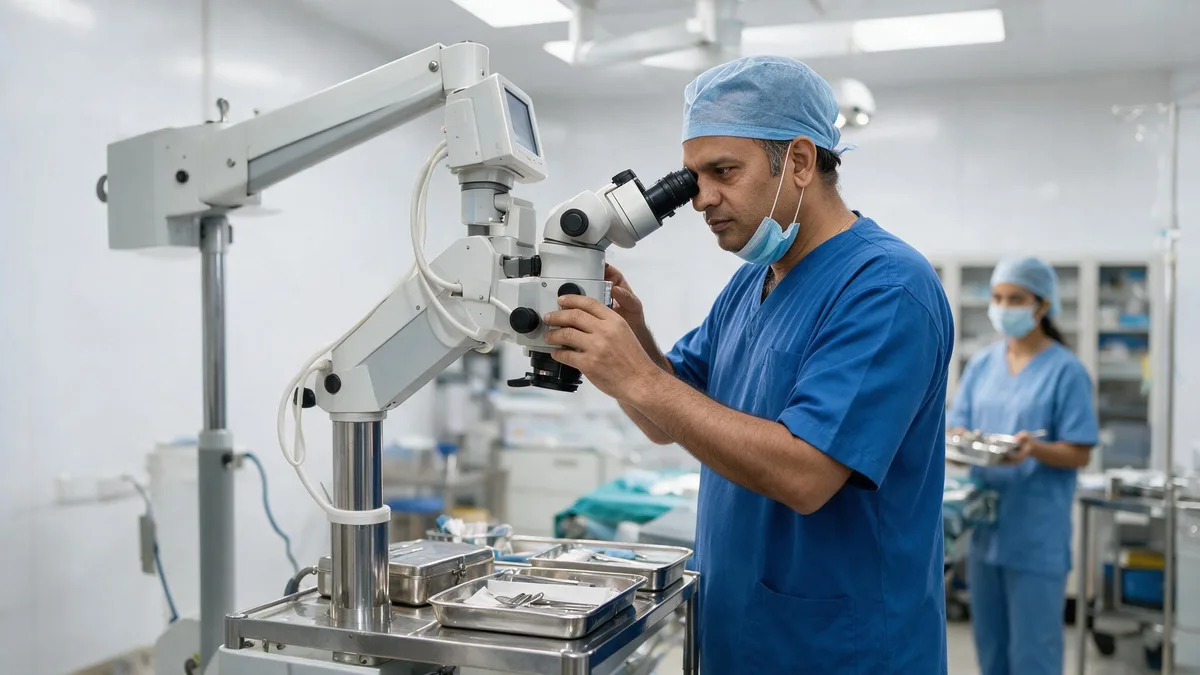
Microscopic Surgery (Day-Care)
Precise ear and throat surgery under the operating microscope, usually with same-day discharge
Some ear and throat problems are best treated with the help of a high-powered operating microscope, which lets the surgeon work with great magnification and precision through the ear canal or the mouth. At Abhinav’s ENT Care Center in Hastinapuram, Hyderabad, many of these procedures are done as day-care surgery, so most patients go home the same day. Dr. G Abhinav Kumar Reddy will assess your problem in person and explain whether this approach is right for you.
What is microscopic (day-care) ENT surgery?
Microscopic ENT surgery is a group of ear and throat operations carried out using an operating microscope. The microscope gives the surgeon a brightly lit, highly magnified view of delicate structures such as the eardrum, the tiny hearing bones, or the vocal cords. This magnification allows very fine, accurate work in areas that are only a few millimetres across.
For many ear procedures, the surgeon works through the ear canal, so there is often no external cut on the outside of the ear. Some operations, however, such as mastoid surgery, may need a small incision behind the ear, which is discussed with you beforehand. For throat and voice-box procedures, a thin instrument is passed through the mouth, again avoiding any cut on the neck or face in most cases. The exact approach depends on your condition.
Because these operations are precise and often minimally invasive, many can be planned as day-care surgery. This means you are admitted, undergo the procedure, are observed for a few hours, and are usually discharged the same day once the ENT team is satisfied that you are stable. Whether day-care is suitable for you depends on the specific procedure, the anaesthesia used and your overall health.
Why the operating microscope is used
The microscope brings several practical advantages for delicate ear and throat surgery.
High precision
Strong magnification helps the surgeon work accurately on very small, delicate structures.
Minimal or hidden incisions
Work is often done through the ear canal or mouth, so large external cuts are usually avoided.
Day-care convenience
Many procedures are planned as same-day surgery, so most patients can recover at home.
Often less tissue disturbance
A magnified, targeted approach can mean less disruption to surrounding healthy tissue.
Clear, well-lit view
Bright illumination and magnification support careful, controlled surgery.
What these procedures involve
Microscopic ENT surgery covers a range of specific ear and throat operations. Which one applies to you is decided by the ENT specialist.
- Myringotomy with grommet
- A tiny opening is made in the eardrum and a small ventilation tube (grommet) is placed to drain fluid and equalise pressure.
- Tympanoplasty / myringoplasty
- Repair of a hole (perforation) in the eardrum to help protect the middle ear and support hearing.
- Ossiculoplasty
- Repair or reconstruction of the tiny middle-ear bones that carry sound vibrations.
- Mastoid surgery
- Surgery on the mastoid bone behind the ear, often to remove disease or infection from the middle ear area.
- Micro-laryngeal surgery
- Microlaryngoscopy through the mouth to remove nodules, polyps or cysts from the vocal cords.
- Anaesthesia options
- Depending on the procedure, surgery may be done under local or general anaesthesia, discussed with you beforehand.
- Day-care pathway
- Admission, surgery and a short observation period, with discharge usually on the same day when suitable.
Conditions these procedures can help treat
Your ENT specialist may consider microscopic surgery for problems such as these. A firm plan is made only after an in-person examination and any tests you may need.
- Persistent middle-ear fluid (glue ear), often in children
- A perforated (torn) eardrum that does not heal on its own
- Recurring or long-standing middle-ear infections
- Hearing difficulty linked to eardrum or middle-ear bone problems
- Cholesteatoma or other disease affecting the mastoid and middle ear
- Vocal-cord nodules, polyps or cysts
- Hoarseness or voice change caused by a growth on the vocal cords
- Blocked ear or pressure problems needing a ventilation tube
What to expect
Consultation and assessment
Dr. Abhinav examines your ear, throat or voice box and may advise hearing tests, a scope examination or scans to plan the right procedure.
Planning and preparation
If surgery is advised, the approach, anaesthesia and day-care plan are explained, along with any instructions to follow before the day.
The procedure
Working under the operating microscope, the surgeon carries out the ear or throat procedure, usually through the ear canal or mouth.
Observation and same-day discharge
You rest and are monitored for a few hours. Once stable, most patients are discharged the same day with clear instructions.
Follow-up
You return for review so healing can be checked and any further care, such as removing packing, can be arranged.
Recovery and aftercare
Recovery is usually gradual and varies from person to person and procedure to procedure. In the first days you may have mild discomfort, a blocked-ear feeling, or a temporary change in voice after throat surgery. The ENT team will give you specific advice on pain relief, keeping the area clean and dry, and when you can return to work, school or normal activity.
It is important to attend your follow-up appointments and to contact the clinic if you notice increasing pain, bleeding, discharge, fever or any symptom that worries you. Final results, including any change in hearing or voice, can take time to settle and cannot be promised in advance, as outcomes depend on your individual condition.
Keep the ear dry
After ear surgery, protect the ear from water as advised until you are told it is safe.
Rest your voice
After vocal-cord surgery, follow any voice-rest advice to help the area heal.
Take medicines as directed
Use any prescribed drops, tablets or pain relief exactly as instructed.
Attend follow-up
Return for review so healing can be checked and next steps planned.
Talk to an ENT specialist in Hyderabad
If you or your child has an ear, hearing or voice problem, a proper assessment is the best first step. Dr. G Abhinav Kumar Reddy at Abhinav’s ENT Care Center in Hastinapuram, Hyderabad can examine you, explain your options and advise whether microscopic day-care surgery is right for you. Call +91 63021 34527 to book an appointment.
Book an appointment
Get an accurate diagnosis and a treatment plan tailored to you.
Meet Your ENT Specialist
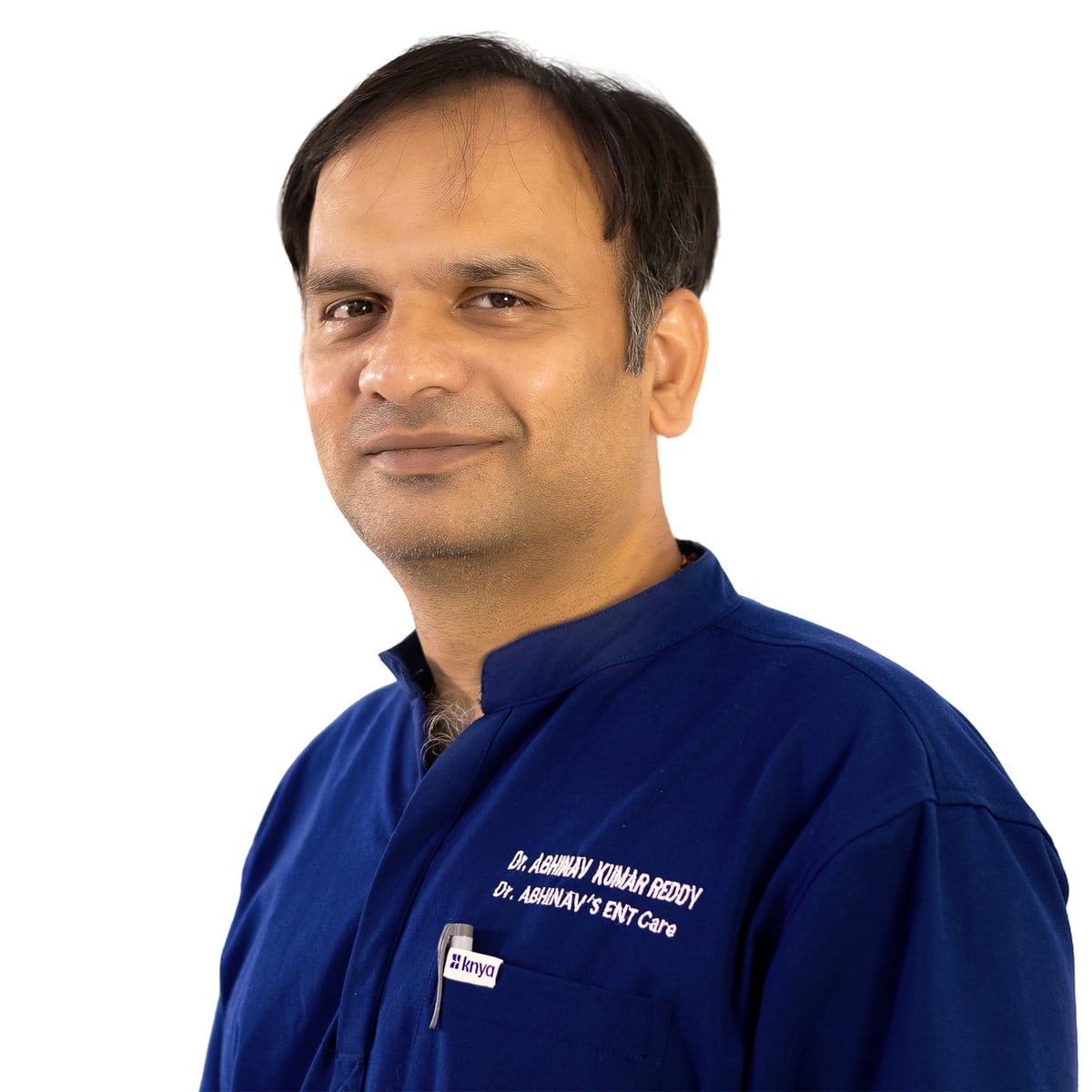
Dr. G Abhinav Kumar Reddy
MBBS, MS (ENT) — ENT Specialist